
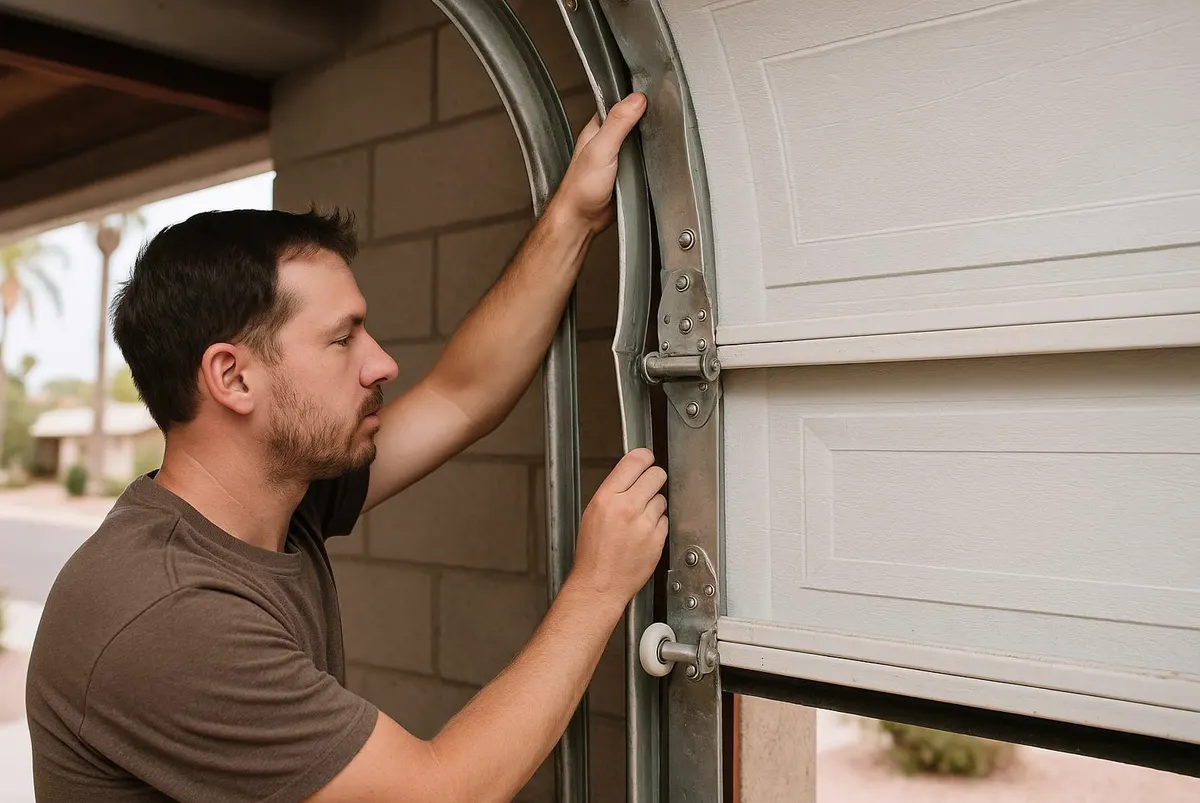
What a Service Call Looks Like Right Now
A typical fall visit in this area starts the same way: the homeowner noticed the door shaking or bowing during the last afternoon storm, or it wouldn't close all the way after a hard rain. When we get the panel open, we usually find one of three things: rust starting on the track bolts and hinges from months of humidity, a cable that's frayed from a door that's been running slightly off-track, or rollers that are seized up and grinding because moisture got into the bearings. None of these start as emergencies. They start as small signs that get ignored until a gust of wind finds the weak point.
Why the Garage Door Is the Weakest Wall in the House
Most exterior walls are solid, braced, and tied into the home's frame. A garage door is a large moving panel held in place by tracks, rollers, hinges, and a spring system doing all the work of keeping it rigid. When wind pushes against a house, that door is the single largest surface that can flex, bow, or get sucked outward. If it fails first, wind pressure rushes into the garage and pushes up on the roof from the inside, which is how a lot of storm roof damage actually starts. This is why Florida building codes for wind-prone regions call for doors rated to handle sustained wind loads, not just standard residential doors. If your door was installed years ago, or came with the house and you've never had it evaluated, it's worth finding out whether it meets that standard before storm season tests it for you.
What Humidity and Storms Do to a Door Over a Season
Even without a direct hit, the ordinary weather pattern here, hot days, afternoon downpours, and thick humidity, wears on a garage door system faster than people expect.
- Rust on hardware: Hinges, track bolts, and spring coils sitting in humid air start corroding from the inside of threads and joints, which is often invisible until a bolt snaps or a hinge seizes.
- Swelling panels: Wood and composite panels absorb moisture and swell slightly, which can throw off alignment in the track and put uneven stress on rollers.
- Weakened cables: Cables that rub against a slightly misaligned track fray gradually. A frayed cable under full spring tension is one of the more dangerous failure points in a garage door.
- Salt air corrosion: Homes closer to the coastal side of the service area see faster rust development on exposed metal hardware, even on doors that look fine from the driveway.
A Pre-Storm Checklist You Can Actually Do
Walk the Track and Hardware
Look for rust bloom on bolts, hinges, and the track itself. Surface rust on a bracket is a maintenance item; rust that's pitted into a bolt head or hinge pin is a replacement item. Check that the track is still straight and tightly fastened to the frame, since a loose bracket is exactly the kind of thing that gives way under wind pressure.
Test the Door's Balance
Disconnect the opener and lift the door halfway by hand. It should hold its position on its own. If it drops or shoots up, the springs are out of balance, and that's not something to adjust yourself, the tension involved can cause serious injury. An unbalanced door also puts extra strain on the opener and the track during high wind, increasing the chance of a mid-storm failure.
Inspect Cables and Rollers
Look at the cables running from the bottom brackets up to the drums. Any visible fraying, kinks, or rust means replacement before the next storm, not after. Rollers should turn smoothly; if they're nylon and cracked, or steel and rusted, they're due for replacement regardless of how the door currently looks when it moves.
Check the Opener's Battery Backup
Power outages are common during and after bigger storms here. If your opener doesn't have battery backup, you'll be stuck manually releasing the door every time the power drops, which gets old fast and leaves the door more exposed while it's manually operated.
Clear the Drainage Path
Afternoon downpours can pool water at the base of the garage door if gutters or grading funnel runoff that direction. Standing water accelerates rust on the bottom bracket and track and can seep under the door seal. A few minutes clearing a drainage path around the garage apron prevents a lot of slow damage.
Building a Maintenance Rhythm, Not a One-Time Fix
Because the wear here is constant, humidity, heat cycling, storm pressure, a single pre-season check isn't quite enough. The doors that hold up best over several storm seasons are the ones on a regular tune-up schedule: lubrication on a set interval, hardware inspection before and after the heaviest part of storm season, and prompt replacement of any part showing early rust or fraying instead of waiting for it to fail outright.
When to Call Precision Garage Door of Dunnellon
If your door shakes noticeably in wind, won't hold its position when lifted by hand, or you've spotted rust on the track hardware or fraying on a cable, that's worth a visit before the next storm rolls through, not after. Our technicians handle Garage Door Cable Repair and Garage Door Spring Repair regularly for exactly these pre-storm situations, along with full Garage Door Tune-Up & Maintenance visits that catch rust, misalignment, and worn rollers before they turn into a mid-storm failure. We'll check the balance, the hardware, and the wind resistance of your current setup, and tell you plainly what needs attention now versus what can wait.
If you're in Dunnellon, Ocala, Crystal River, Citrus Springs, Inverness, Beverly Hills, Hernando, or Rainbow Springs and want your garage door ready before the next big wind, call Precision Garage Door of Dunnellon today to schedule a storm-readiness check.